How Digital Twin Technology Is Transforming Physical Rehabilitation
Modern rehabilitation is moving toward more personalised, measurable, and accessible care. One emerging technology making this possible is Digital Twin Technology.
Digital twins can help doctors and therapists design treatments tailored to each patient, track recovery more accurately, and support rehabilitation from home.
What is a Digital Twin?
A digital twin is a digital representation of your body or a part of it, such as your leg or arm. This copy is updated with real data from sensors, watches, or machines that track your movement.
How It Helps in Rehab
Personal Treatment Plans
The computer copy helps doctors and physiotherapists test different exercise plans on the screen first. They can see which plan is likely to work best for your body before asking you to do it.
Better Monitoring and Feedback
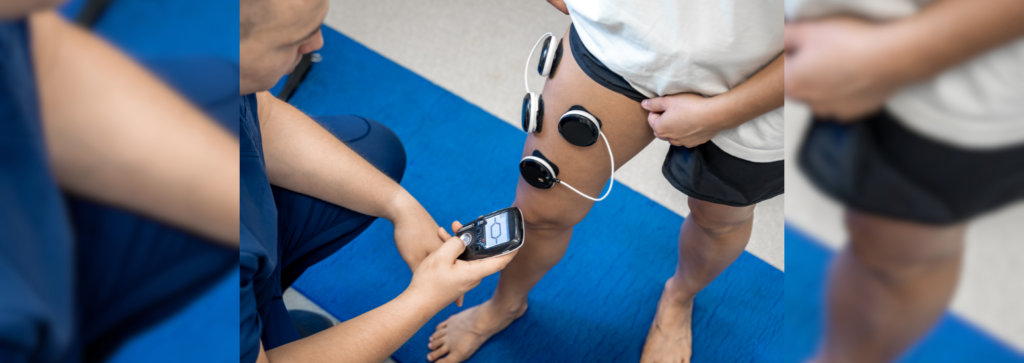
Small sensors on your body can send movement data to the digital twin while you exercise. You can then get clear, live feedback on whether you are moving the right way, often shown like a game or a simple picture on a screen.
Clear Progress Tracking
The digital twin can measure things like how far your joint can bend or how even your walking is. It shows small changes over time so you and your therapist can see if you are improving, even when it is hard to see with the eye.
Smarter and Safer Machines
If you use a robot or exoskeleton for walking or arm training, the digital twin can help the machine adjust how much support it provides. It can help when you are strong, increase it when you are tired, and warn if something looks unsafe.
Rehab at home
With simple sensors and the internet, the digital twin can keep watching your exercises while you are at home. Your therapist can check your progress from the hospital or clinic and change your exercises without you always needing to travel.

Better Treatment Choices
Doctors can use the digital twin to compare different options, like “What if we change this exercise?” or “What if we use a brace?” They can see the likely effect on your movement before making a final decision.
Everyday Examples
After a stroke, a person doing arm exercises with a robot can have a digital twin that shows when they are using their shoulder or trunk incorrectly so that the therapist can correct it.
A person learning to walk again can wear small sensors; the digital twin shows which muscles are weak so that the therapist can focus training on those muscles.
Someone with knee pain can have their walking style tested on the digital twin to identify safer walking patterns that reduce stress on the knee.

They can be costly and need experts to set them up and keep them working.
Rules about data safety and privacy, and making the tools easy to use and understand for both patients and staff, are still being developed.
Digital twins are important for personalised therapy planning because they let doctors “test and tune” treatment on a safe virtual copy of the patient before doing it on the real person.
Key Reasons They Matter
Every Person Is Different
Usual treatment uses “one plan for many people,” which may not fit everyone’s body, lifestyle, or disease pattern. A digital twin is built from that one patient’s data, so the plan is shaped around their exact condition.
Try Plans Safely on a Virtual Copy
Doctors can use the twin to simulate different exercises, drug doses, or machine settings and see which option looks best and safest before changing the real therapy. This helps avoid a “trial and error” approach directly on the patient.
Adjust Treatment in Real Time
Because the twin can update with new data (sensors, scans, test results), it can show early if the current plan is not working well. The therapist or doctor can then quickly change the intensity, type, or timing of therapy to keep it effective.
Better Balance Between Benefit and Risk
In serious conditions (like cancer radiotherapy), digital twins can help find plans that control the disease while reducing side effects by comparing many “what if” scenarios on the computer. This makes the final plan more personalised to what that patient can safely tolerate.
Clear Goals and Realistic Expectations
Twins can predict likely progress and possible setbacks, helping to set goals that are challenging yet achievable for each individual. This supports better communication between patient and clinician when choosing a personalised plan.
The Future of Rehabilitation: Digital Twins
Rehab Software is developing a digital twin platform that helps rehabilitation therapists design more personalised and predictable therapy plans for their patients. Using advanced AI and machine learning, our system creates virtual models (digital twins and avatars) of each patient’s movement and recovery profile, allowing clinicians to explore and optimise different therapy options before applying them in real life.
Rehabilitation physicians and therapists interested in AI/ML‑based therapy planning are welcome to contact us to learn how this technology can support their practice. While such solutions are expected to become a significant investment as they mature and scale, early adopters will gain a strong advantage in understanding, shaping, and leading this new way of delivering rehabilitation care.